
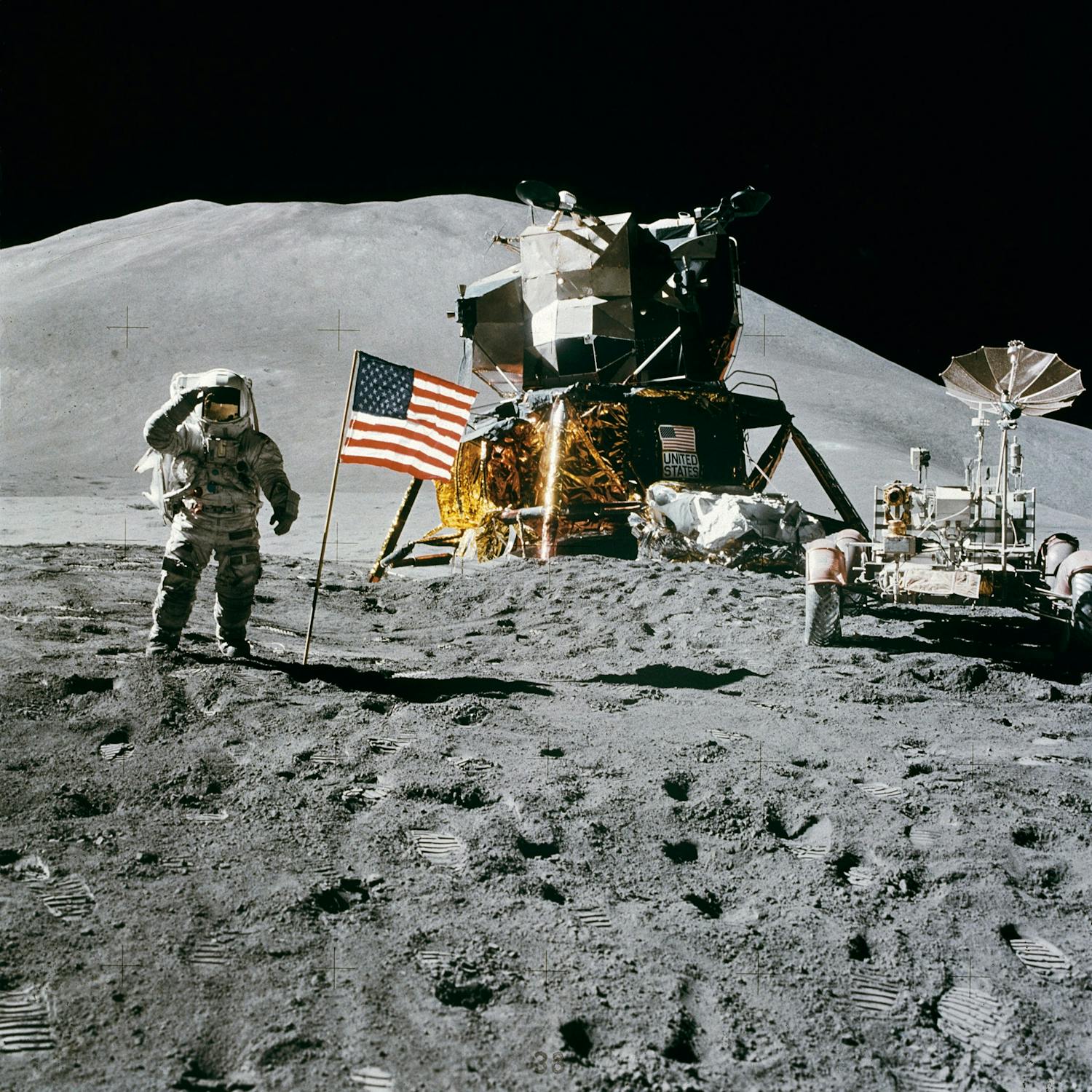

A new chapter in space exploration has begun as commercial space companies successfully complete multiple lunar missions, demonstrating that private enterprise can not only match but potentially exceed government space agencies in advancing humanity's presence beyond Earth. These achievements mark a fundamental shift in how space exploration is funded, executed, and expanded, opening possibilities for permanent lunar settlements and deeper space exploration.
The successful landing of commercial spacecraft on the Moon, the establishment of lunar communication networks, and the beginning of resource extraction operations represent milestones that were once the exclusive domain of national space agencies. Today, private companies are not just participating in space exploration—they're leading it, with ambitious plans for lunar bases, space tourism, and eventually missions to Mars.
Revolutionary Commercial Achievements
The past year has seen an unprecedented series of commercial space achievements. Multiple private companies have successfully landed spacecraft on the Moon, deployed rovers and scientific instruments, and even begun preliminary operations for extracting lunar resources. These missions, funded primarily through private investment and commercial contracts, demonstrate that space exploration is no longer solely dependent on government funding.
"We're witnessing a fundamental transformation in space exploration," said Dr. Sarah Martinez, director of the International Space Research Institute. "Commercial companies are bringing innovation, speed, and efficiency that government programs often struggle to match. This isn't replacing government space programs—it's complementing them and accelerating progress in ways we couldn't have imagined a decade ago."
The success of commercial lunar missions has been built on years of technological development, significant private investment, and partnerships with government space agencies. Companies have developed reusable spacecraft, advanced landing systems, and innovative approaches to space operations that reduce costs and increase reliability. These technological advances are making space exploration more accessible and sustainable.
Lunar Resource Extraction Begins
Perhaps the most significant development is the beginning of commercial resource extraction on the Moon. Several companies have successfully demonstrated the ability to extract water ice from lunar regolith, a critical resource for future lunar settlements. Water can be split into hydrogen and oxygen for rocket fuel, used for life support systems, and even used for growing food in lunar greenhouses.
These resource extraction operations represent the first steps toward establishing a sustainable human presence on the Moon. By producing fuel and other resources locally, future missions won't need to transport everything from Earth, dramatically reducing costs and enabling more ambitious exploration. This capability is essential for establishing permanent lunar bases and eventually supporting missions to Mars and beyond.
"Lunar resource extraction changes everything," explained Marcus Thompson, CEO of a leading commercial space company. "Once we can produce fuel and other resources on the Moon, we've created a stepping stone to the rest of the solar system. The Moon becomes a gas station and supply depot for deeper space exploration. This is the key to making space exploration economically sustainable."
The extraction operations are still in early stages, with companies testing different techniques for processing lunar materials. Some are focusing on extracting water ice from permanently shadowed craters near the lunar poles, while others are developing methods to extract metals and other materials from lunar soil. These operations are laying the groundwork for larger-scale resource extraction in the coming years.
Lunar Infrastructure Development
Commercial companies are also developing critical infrastructure for lunar operations. Communication networks are being established to support operations across the lunar surface, power systems are being deployed to provide energy for operations, and transportation systems are being developed to move people and cargo across the Moon.
These infrastructure developments are essential for supporting larger-scale lunar operations. Without reliable communications, power, and transportation, lunar bases and resource extraction operations would be impossible. Commercial companies are building this infrastructure with an eye toward supporting not just their own operations but also future government and commercial missions.
Some companies are developing modular lunar base systems that can be assembled on the Moon to create permanent habitats. These systems include living quarters, laboratories, manufacturing facilities, and life support systems. The first commercial lunar bases are expected to be operational within the next few years, providing facilities for scientific research, resource extraction, and eventually space tourism.
Space Tourism and Commercial Opportunities
The success of commercial lunar missions is also opening new opportunities for space tourism. Several companies are developing systems to take paying customers to the Moon, with the first commercial lunar tourism flights expected within the next few years. These missions will allow private citizens to experience space travel and see Earth from a perspective that was once available only to astronauts.
Space tourism represents a significant commercial opportunity, with wealthy individuals and companies willing to pay substantial sums for the experience. This revenue helps fund further space exploration and development, creating a sustainable business model for commercial space companies. However, space tourism also raises questions about accessibility, safety, and the environmental impact of increased space travel.
Beyond tourism, commercial space companies are exploring other revenue opportunities. These include manufacturing in space, where the unique conditions of microgravity enable production of materials and products that can't be made on Earth. Pharmaceutical companies are particularly interested in space manufacturing, as microgravity can enable production of purer crystals and more effective drugs.
Government and Commercial Partnerships
The success of commercial space exploration has been built on partnerships between private companies and government space agencies. Government agencies provide contracts, technical expertise, and regulatory frameworks, while commercial companies bring innovation, efficiency, and private investment. These partnerships are proving mutually beneficial, accelerating progress while reducing costs for government programs.
Government space agencies are increasingly relying on commercial companies for routine operations, allowing agencies to focus on more ambitious exploration goals. Commercial companies handle transportation to and from space stations, satellite launches, and now lunar missions, freeing government resources for deeper space exploration and scientific research.
These partnerships are also creating new models for space exploration. Rather than government agencies developing and operating all systems themselves, they're contracting with commercial companies for specific services. This approach has proven more cost-effective and has accelerated the pace of space exploration.
Scientific Research and Discovery
Commercial lunar missions are also advancing scientific research. Companies are deploying scientific instruments, conducting experiments, and collecting data that advances our understanding of the Moon, space, and Earth. This research is valuable not just for scientific knowledge but also for supporting future exploration and resource extraction operations.
Some commercial missions are focused specifically on scientific research, with companies partnering with universities and research institutions. These partnerships combine commercial efficiency with scientific expertise, enabling research that might not be possible through traditional government programs alone.
The data collected by commercial missions is also being shared more broadly than traditional government missions. Companies are making data available to researchers worldwide, accelerating scientific discovery and enabling new insights into lunar geology, space environment, and potential for human habitation.
Challenges and Risks
Despite the successes, commercial space exploration faces significant challenges. Space operations are inherently risky, and several commercial missions have experienced failures. These failures are part of the learning process, but they highlight the challenges of space exploration and the importance of robust safety systems and procedures.
Regulatory frameworks are still evolving, with governments working to establish rules for commercial space operations that balance safety, environmental protection, and commercial development. These regulations must address issues including space debris, planetary protection, and liability for accidents or environmental damage.
Financial sustainability is also a concern. While some commercial space companies have achieved profitability, others are still dependent on investment and government contracts. The long-term sustainability of commercial space exploration will depend on developing viable business models that generate consistent revenue.
Environmental and Ethical Considerations
The expansion of commercial space activities raises important environmental and ethical questions. Increased space traffic creates more space debris, which poses risks to satellites and future missions. Companies and governments are working to address this through debris mitigation strategies and cleanup technologies, but the challenge is growing.
Lunar resource extraction also raises questions about property rights, environmental protection, and equitable access to space resources. International agreements are being developed to address these issues, but consensus has been difficult to achieve. The question of who owns space resources and how they should be managed is becoming increasingly important as commercial operations expand.
There are also concerns about the environmental impact of increased space travel, particularly as space tourism expands. Rocket launches produce emissions that could affect Earth's atmosphere, and increased space traffic could have other environmental impacts. These concerns need to be balanced against the benefits of space exploration and the potential for space-based solutions to Earth's environmental challenges.
Future Prospects
The success of commercial lunar missions is just the beginning. Companies are already planning more ambitious missions, including establishing permanent lunar bases, developing space manufacturing capabilities, and eventually supporting missions to Mars. These plans represent a vision of space exploration that is more ambitious, more accessible, and more sustainable than ever before.
The next decade is expected to see significant expansion of commercial space activities. Lunar bases will become operational, space tourism will become more accessible, and commercial missions to Mars and other destinations will begin. This expansion will require continued technological development, investment, and international cooperation, but the foundation is being laid now.
Commercial space exploration is transforming humanity's relationship with space, making it more accessible and opening new possibilities for exploration, research, and economic development. The achievements of commercial companies are demonstrating that space exploration can be both ambitious and sustainable, opening a new era of human presence beyond Earth.
The expansion of commercial lunar missions represents a fundamental shift in space exploration, with private companies leading the way in establishing humanity's presence beyond Earth. These achievements demonstrate that commercial enterprise can accelerate space exploration while making it more sustainable and accessible. However, success will require continued innovation, investment, and cooperation between commercial companies, government agencies, and the international community. The future of space exploration is being written now, and commercial companies are playing a leading role in shaping that future.